
Service from All, Opportunity for All
Roughly 5 million Americans between 16 and 24 are neither in school nor employed. Structural workforce shortages persist in key sectors like health care, education, energy, and infrastructure. The AI workforce transition will only complicate the landscape, straining the nation’s outdated education models and displacing workers across every level of the economy.
To compound our problems, deep civic divides have severely weakened our social structures. Communities are divided along political lines. Trust in institutions is at an all-time low.
How can we work together to overcome these challenges?
These problems are not disconnected. They demand a common answer: everyone can serve.
Well-designed service programs create three mutually reinforcing outcomes: they drive community progress by deploying participants to meet real needs; they build meaningful careers by connecting participants to skills, credentials, and employers; and they forge bonds across differences by bringing a group of diverse participants together. Done right, each of these outcomes strengthens the others.
Service is not make-work volunteering. It is a paid workforce and community development strategy to put Americans to work and build the connections to strengthen communities and careers while forging bonds across the differences that divide us. Through rigorous skill building and job training, participants earn the credentials and connections that lead to family-sustaining careers.
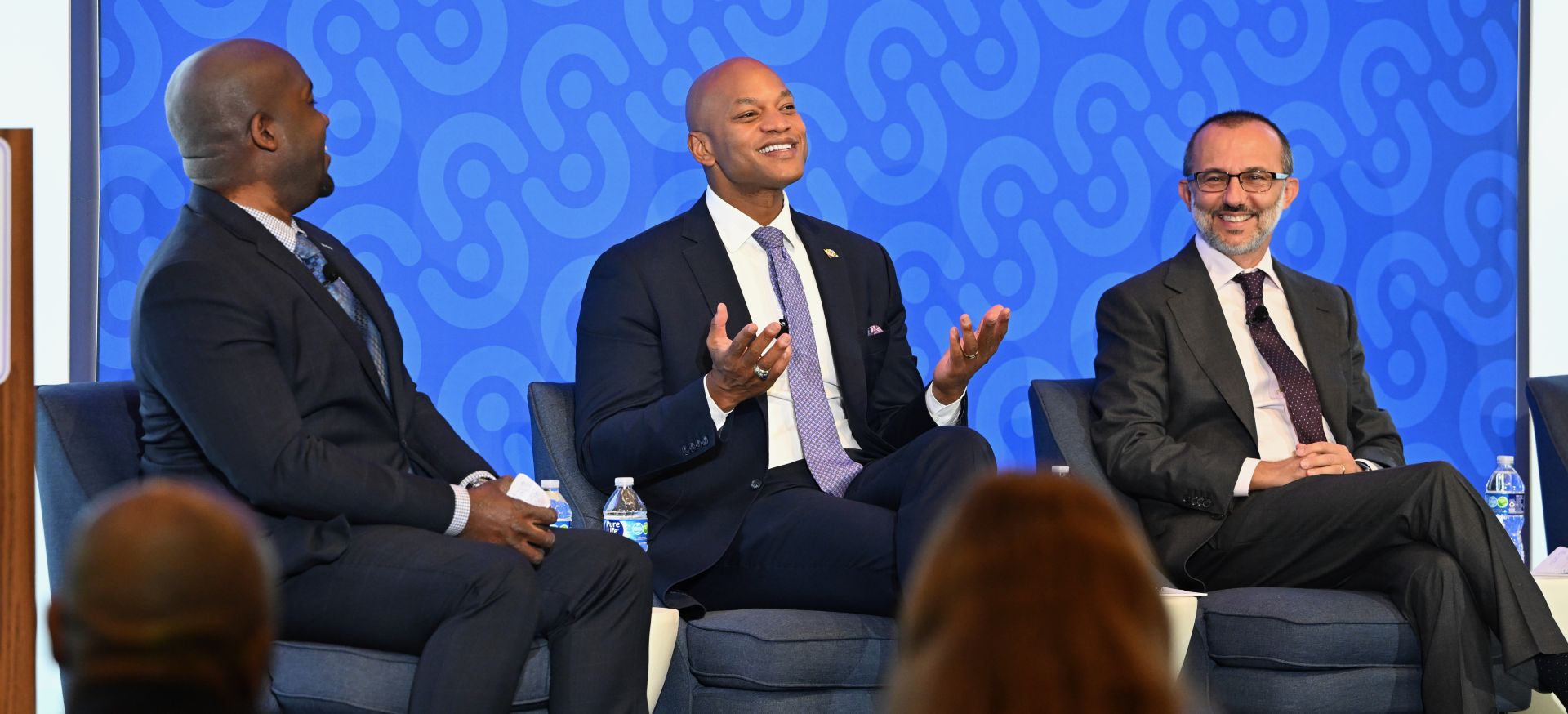
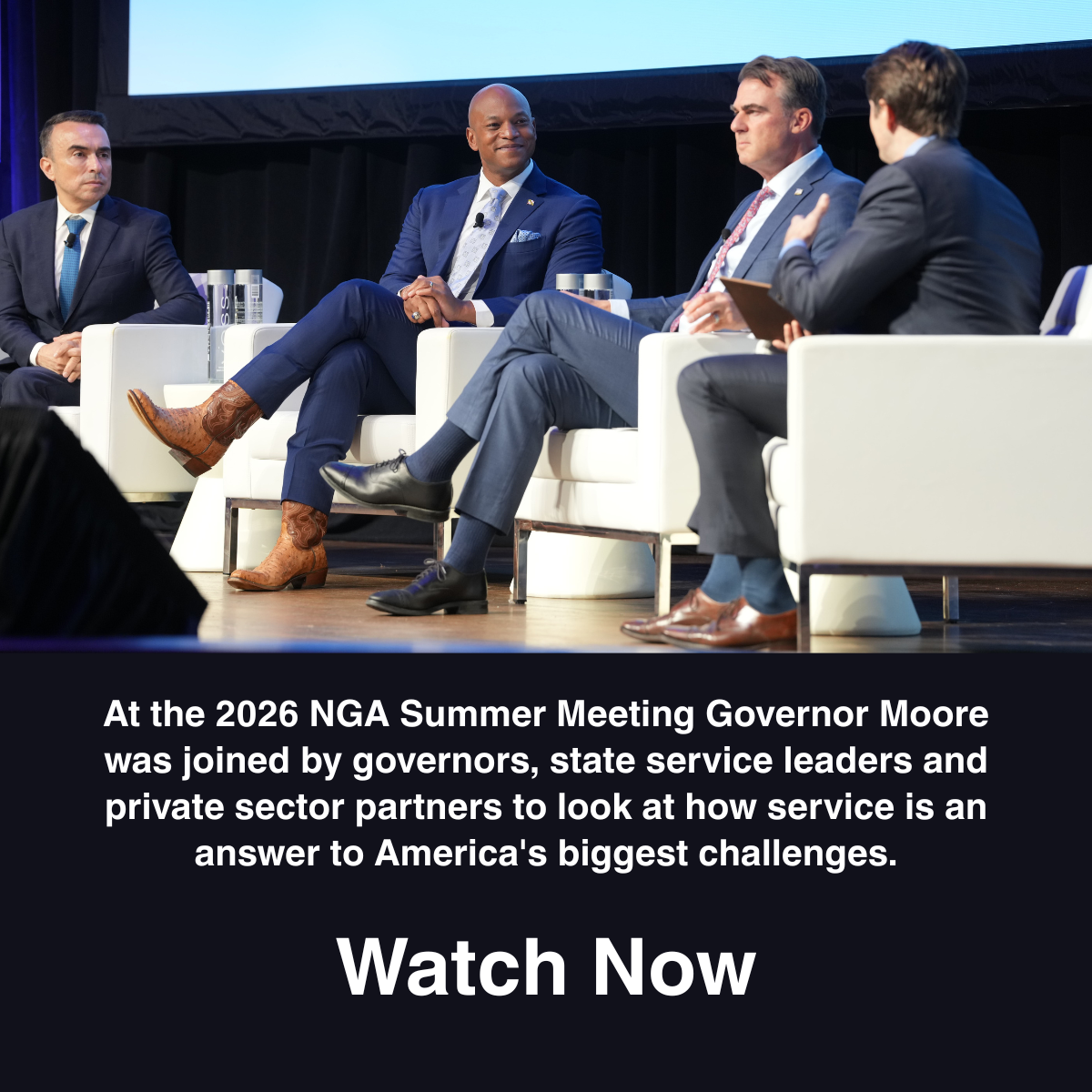
Under the leadership of Governor Wes Moore, the National Governors Association has launched its 2026–2027 chair’s campaign, Service United, a transformative project to advance state-level service programs. Within a decade, the goal is 1 million Americans engaged in service annually.
“Service does not have to be an occupation, but it needs to be a way of life – how we move, how we maneuver, how we operate. It’s the debt that we pay back.”
Maryland Governor Wes Moore
Why Service? Why Now?
Driving Community Progress
Real work. Real impact.
Service members tackle urgent needs in education, healthcare, climate, and eldercare to address capacity gaps with genuine responsibility, not symbolic gestures.
Building Careers for the Future
Skills, credentials, pathways.
Intentional design around skill development, credentialing, employer partnerships, and apprenticeship bridges to lasting employment.
Forging Bonds Across Differences
Civic infrastructure for democracy.
Young people from different backgrounds discover shared purpose through shared work, helping build the social connection and social trust necessary for a functioning democracy.
- Workforce Crisis: AI and the rapid transformation of the American workforce, along with critical shortages in healthcare, teaching, and tech sectors, create both urgency and opportunity. Service programs build capacity while providing critical skills training and creating pathways to meaningful careers.
- Fiscal Advantage: Federal AmeriCorps matching (often 1:1 or better) multiplies state investments. Every state dollar becomes two — and philanthropic investments can extend that much further.
- Opportunity Gap: 5 million young Americans (ages 16–24) are neither in school nor employed. Service offers a proven pathway to building strong foundations and economic mobility for the most disconnected.
- Social Cohesion: Service provides opportunities to work across difference and tackle real-life challenges to improve community outcomes in ways that civic education alone cannot deliver. When you serve together, you stick together.
“Service Will Save Us.”
Across the country, national service programs act as laboratories for innovation in workforce development models and state-based strategies to improve outcomes for people in local communities. With support from Einhorn Collaborative, City Year and the Center for State Service Innovation, led by Service Year Alliance and America’s Service Commissions, have helped spread high-quality practices and strengthen service infrastructure nationwide, laying the groundwork for Service United to expand what’s possible for state-based service.
Through the leadership of bipartisan, governor-appointed state service commissions, many states are deepening the career development opportunities embedded in AmeriCorps programs. Other states leverage state and philanthropic dollars, alongside federally funded AmeriCorps investments, to develop homegrown service models that provide flexibility to engage more participants in meeting the unique community needs of their states.
Maryland’s Service Year Option places young adults who recently completed high school with a host site partner that is aligned with their area of interest. While in the program, participants earn a minimum of $15 dollars an hour, in addition to a completion award of $6,000. Participants may also earn credentials in skilled trades and apprenticeship programs to facilitate transition into continued education or the workforce, depending on their service path.
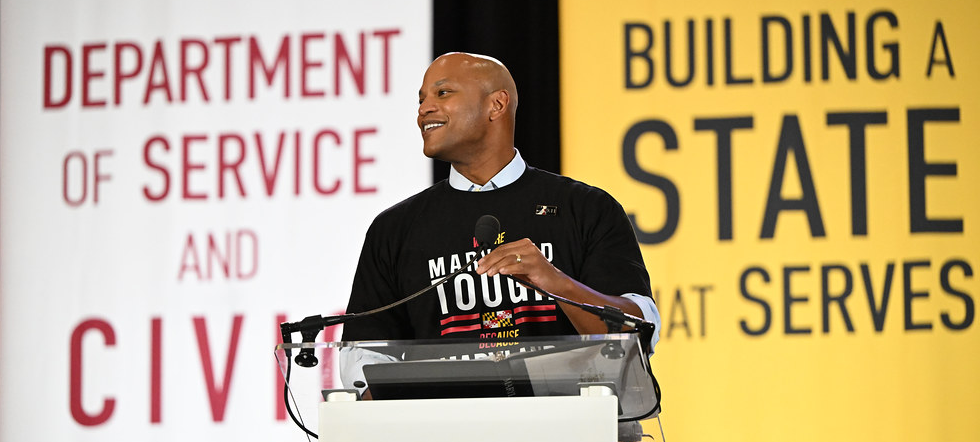
The Maryland Department of Service and Civic Innovation partners with non- and for-profit organizations, state and local governments, and higher education institutions across the state to host program participants. Host site partners also represent a diverse spectrum of focus areas from education to environment and conservation, to health, information technology, public safety and more.
Using Maryland’s Service Year Option as the model, the NGA will work with participating states to assess and scale service program implementation among participating states, documenting accounts of success, challenges, pivots and real costs, making every transferable lesson accessible to governors. The NGA will also provide technical support to select early adopter states, in addition to creating a resource center and convening a policy lab to consider how AI may be harnessed to promote workforce development.
The Service United Fund
Realized through support from the Andrew Carnegie Foundation and the Schultz Family Foundation, the launch of Service United marks historic philanthropic investment in NGA to support service, bolster workforce development and reduce polarization.
Through the Service United Fund, governors will have access to resources to plan, build or advance service programs that improve outcomes for both young people and communities through grants of up to $1.5 million. The first round of grantmaking opportunities for states is now open.
Service United Supporters
NGA would like to thank the following organizations for supporting Service United